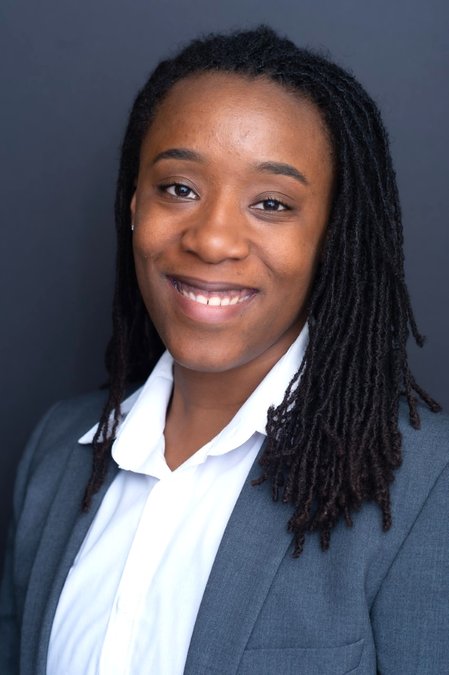
Governor Gavin Newsom has appointed 33-year-old Tracy resident Dr. Chaunise “Chaun” Powell to the California Board of Behavioral Sciences, placing a San Joaquin County voice on the statewide board that oversees California’s behavioral-science professions. Powell is one of the youngest documented appointees in the board’s history — a milestone with implications for residents from Stockton and Lodi to Manteca, Tracy, Ripon, Escalon and Lathrop.
The appointment, announced Aug. 14, is significant countywide: Powell already serves on the San Joaquin County Behavioral Health Advisory Board, giving her a rare dual perspective on local needs across the county and statewide workforce policy. She currently works as an Education and Health Consultant with New Era Pedagogics and has held leadership roles in student services and youth health and wellness, including Senior Chief of Student Services at the Alameda County Office of Education and Executive Director of Youth Health and Wellness at the Santa Clara County Office of Education.
Critical Moment For Behavioral Health
San Joaquin County has about 273.7 mental-health providers per 100,000 residents, versus 425.5 statewide — roughly 36% fewer providers per capita than California overall, according to the county’s 2025 Community Health Needs Assessment. The same assessment reports a 48% rise in “deaths of despair” (suicide, alcohol-related disease and drug overdoses) over three years. Federal mortality data put the county’s age-adjusted suicide rate at about 11.3 deaths per 100,000, above the statewide rate of 10.3.
State workforce projections indicate California will need tens of thousands of additional licensed behavioral-health professionals statewide.
The county’s 2026 Point-in-Time Count, coordinated by the San Joaquin Council of Governments, identified 3,306 people experiencing homelessness, including 1,838 unsheltered — a 30% drop in total homelessness and 47% drop in unsheltered homelessness since 2024, though thousands remain without stable housing.
“When we talk about mental health, we are talking about real people, real families and real communities,” said Dr. Powell. “Behavioral health touches education, housing, substance use, public safety, workforce development and the overall health of our communities. San Joaquin County has made important investments, but we have to continue asking how we can expand access, strengthen our workforce and make sure people receive support before they reach a crisis.”
Bringing A Local Perspective
Powell also serves on the California Disrupting Disparities Core Advisory Committee, the City of Tracy Parks and Community Services Commission, the Palo Alto University School Social Work Community Advisory Council, and the San Jose State University Healthy Development Community Clinic. Her career spans roles as a social worker, school counselor, dean of students, assistant principal, and director of student services. She is a Licensed Clinical Social Worker (LCSW) and holds a Doctor of Education in Educational Leadership and a Master of Social Work from California State University, East Bay, and a bachelor’s degree in psychology from the University of Denver.
“We cannot build a stronger behavioral-health system without investing in the people who make that system work,” Powell said. “That means looking at how we recruit, train and retain behavioral-health professionals, while also making sure those professionals reflect and understand the communities they serve.”
Her appointment – which requires Senate confirmation – comes as the county expands behavioral-health infrastructure, including $38.2 million in state funding received in March 2026 to build a 52-bed regional Social Rehabilitation Facility and Community Outpatient Center at the SJ BeWell Campus.
“San Joaquin County has tremendous people doing important work every day,” Powell said. “I’m honored to bring the experiences and perspectives of our community to the state level. My hope is that we can continue moving toward a system where mental-health and substance-use support is accessible, preventative, culturally responsive and available when people need it most.”