The California red-legged frog, a federally threatened species absent from Yosemite National Park for decades, has made a significant comeback after 10 years of coordinated conservation work.
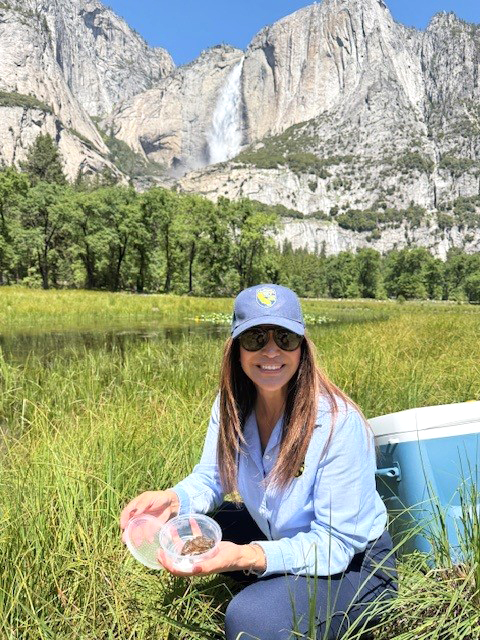
Partners marked the milestone on Thursday, May 7 with the symbolic release of the program’s 10,000th frog in Yosemite Valley.
The recovery effort is led by the National Park Service in collaboration with U.S. Fish and Wildlife Service, the California Department of Fish and Wildlife, Yosemite Conservancy and San Francisco Zoo & Gardens.
“This milestone reflects years of focused work to restore a species that plays an important role in the park’s ecosystem,” said Rob Grasso, aquatic ecologist at Yosemite National Park. “After invasive bullfrogs eliminated red-legged frogs from the area decades ago, we removed those threats and created conditions for recovery. Today, multiple generations of frogs are established in Yosemite Valley.”
Invasive American bullfrogs, introduced to the park, drove the species’ decline. Elevated raccoon populations, fueled by open refuse sites that remained in use until the 1970s, also contributed to the loss. Park staff spent decades removing bullfrogs, while habitat improvements tied to the Merced River Plan restored wetlands, streambanks and river systems critical to the frog’s survival.
“Our partners have been essential to the recovery of the California red-legged frog,” said Kim Turner, acting field supervisor for the Sacramento Fish and Wildlife Office. “We appreciate the progress made over the past decade and remain committed to this collaborative effort.”
During the May 7 event, speakers delivered remarks near Yosemite Falls before releasing several zoo-reared frogs, including the program’s symbolic 10,000th frog, nicknamed “Twain.”
“The California Department of Fish and Wildlife is proud to have assisted the recovery of California’s official state amphibian in Yosemite,” said Laura Patterson, amphibian and reptile conservation coordinator for the Department. “Grants administered by the Department, using funds approved by the voters of California, facilitated the habitat restoration necessary for the success of this recovery effort.”
A key component of the effort is a dedicated rearing facility established in San Francisco in 2016 through a partnership between the National Park Service and the San Francisco Zoological Society. At the facility, staff raise frogs from wild-collected eggs to one- and two-year-old juveniles in a controlled environment before releasing them into the park.
The program is supported by the Zoo-Park Partnership Program, facilitated by the Wildlife Restoration Foundation, and is considered a model for species recovery in California.
“When the program began in 2016, no California red-legged frogs remained in Yosemite Valley,” said Dr. Rochelle Stiles, director of field conservation at the San Francisco Zoo & Gardens. “Today, every frog in the valley traces back to this effort. Despite drought, severe winters and flooding, the population has proven resilient.”
This year, the zoo plans to release about 830 juvenile frogs into Yosemite while raising approximately 600 eggs for future release.
“Protecting vulnerable species helps preserve the park’s natural balance,” said Cassius Cash, president of Yosemite Conservancy. “This milestone shows what sustained collaboration can achieve.”
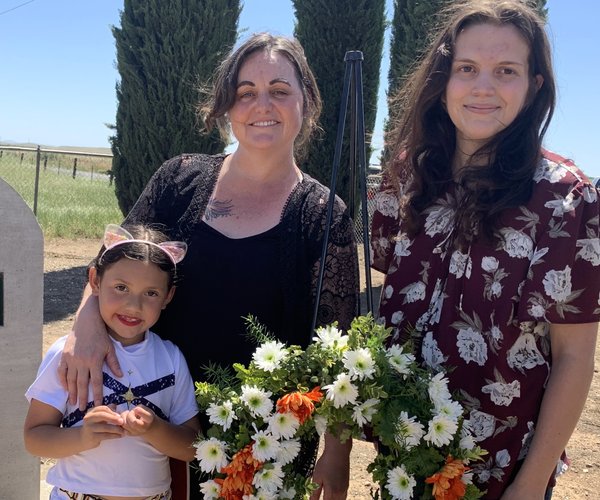
The effort also relied on private landowner Diane Buchholz of Garden Valley, California, who allowed researchers to collect frog eggs from her property.
The California red-legged frog gained national recognition in The Celebrated Jumping Frog of Calaveras County by Mark Twain. The species, the largest native frog in the western United States, grows 2 to 5 inches long and is known for its reddish underside and soft, short calls. It inhabits ponds, streams and wet meadows.