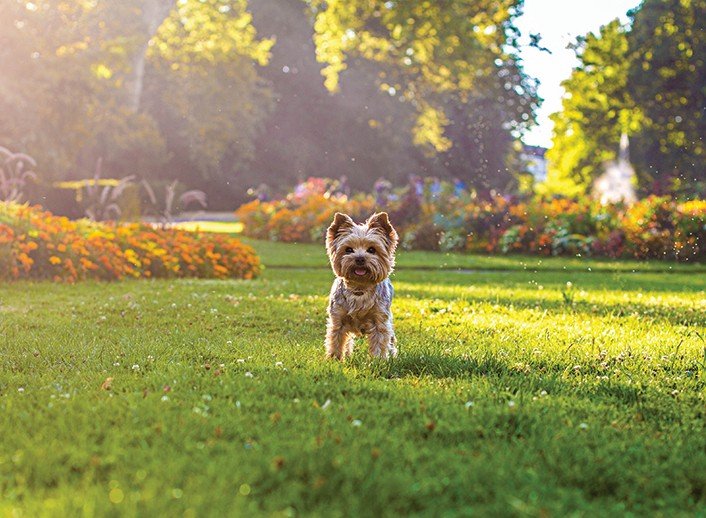
Few can resist the call of the great outdoors, and that includes the family pet. Pets can gain a lot by spending supervised time outdoors, which offers opportunities for exercise and mental stimulation.
While time in the yard can be good for pets, there are some notable dangers pet owners must be aware of. The ASPCA notes that ticks, blue-green algae, insects like bees, wasps and hornets, and toxic plants are just some of the backyard hazards that can jeopardize pet health. Of course, there’s also the risk that pets wander off when spending time outdoors. No matter how attentive pet owners are, pets may bound off in pursuit of wildlife or simply wander off out of curiosity. Pet owners looking to avoid such scenarios can employ these measures to keep their furry friends in the yard.
Spay or neuter the animal. The American Animal Hospital Association notes that intact pets have an innate drive to reproduce. That’s true for both male and female pets, and the compulsion to reproduce increases pets’ desire to roam in search of a mate. Spaying or neutering removes that hormonal desire, which is one of a handful of reasons to spay and neuter a pet.
Erect a fence around the property. Fences are sometimes characterized as “great neighbors,” and they’re also effective at keeping some pets within a yard. Some pet owners opt for invisible fencing, but many animal advocacy organizations note this option can be inhumane. For example, VCA Animal Hospitals notes that some animals may ignore the audible signal that warns pets to remain in the yard, which then leads to the discharge of an electric stimulus similar to a shock. That can be painful to the animal. A traditional, physical fence will not harm the animal, and it will prevent the pet from seeing animals on the other side of the fence that may compel it to chase.
Protect animals from loud noises. Wildlife and other domesticated pets often compel pets to chase, but some pets run out of fear of loud noises. Pet owners are urged to keep their pets indoors during times when loud noises can be expected. Holidays when fireworks are shot off, mornings when loud lawn mowers or leaf blowers are used, and the sound of thunder all can frighten pets and compel them to flee.
Reconsider your landscaping. Pets may run when they see wildlife enter the yard, and that wildlife then runs away upon recognition that a pet is on the chase. When choosing plants for your property, pick plants that are unlikely to attract wildlife. In addition, remove bird feeders from the property, as they tend to attract small animals like chipmunks that many pets cannot resist chasing.