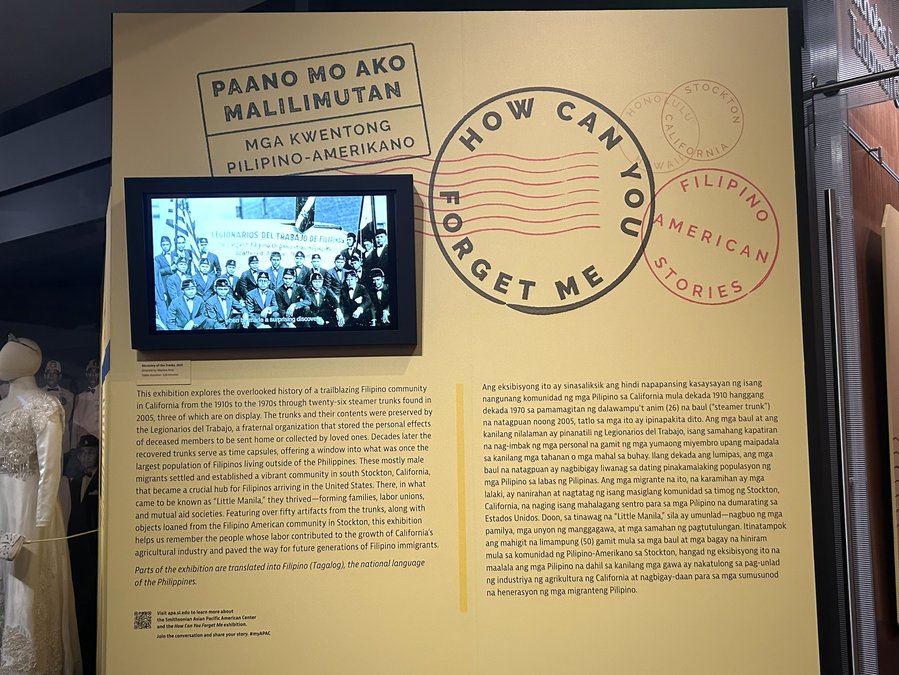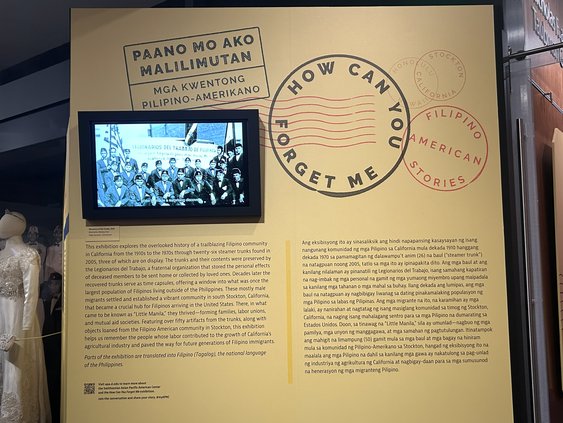
By the 1940s, Stockton had the largest Filipino population outside of the Philippines. The San Joaquin County Historical Museum is proud to have partnered with the Smithsonian and Stockton’s Little Manila Rising to celebrate and share the stories of Stockton’s Filipino community through the new exhibit, How Can You Forget Me: Filipino American Stories, now on view at the Smithsonian National Museum of American History.
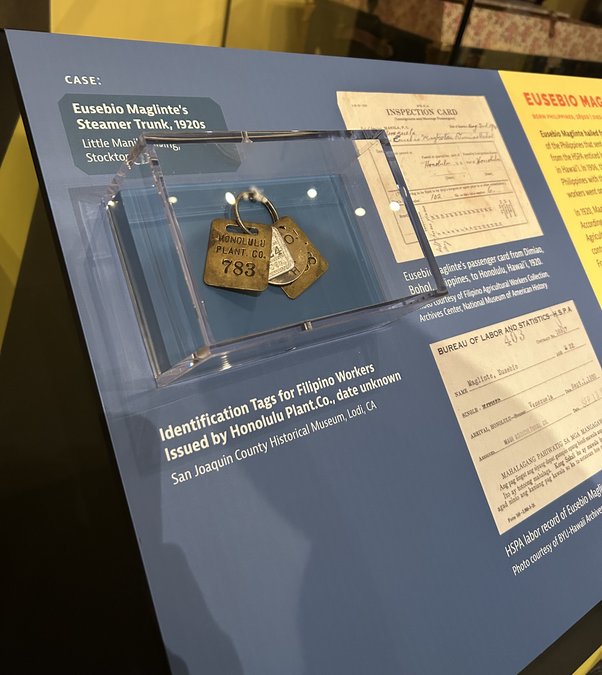
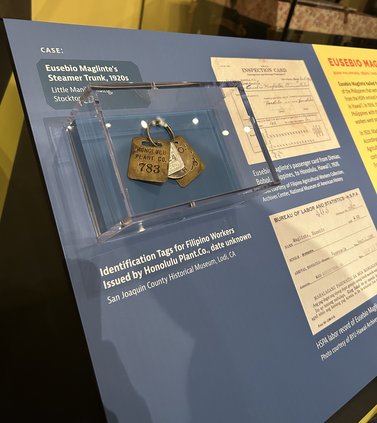
Over the last several years, the San Joaquin County Historical Museum staff have worked closely with the Smithsonian’s Asian Pacific American Center under the leadership of Sam Vong, sharing information and artifacts which formed the foundation of this important exhibit. More than a dozen artifacts (originally preserved by Little Manila Rising co-founders Dillon Delvo and Dr. Dawn Mabalon and now part of the San Joaquin County Historical Museum’s collection) were loaned to the Smithsonian, such as a steamer trunk belonging to local Filipino immigrant Enrique Andales and a complete band uniform from Stockton’s Daguhoy Lodge. Also included were several “bango tags,” unique reminders of the sacrifices and hard work of thousands of Filipinos seeking a better life in the United States. On their way to Stockton, many Filipino immigrants found work on sugar plantations in Hawaii. Rather than use their names, employers issued these men and women numbered tags as a form of identification for payment and other transactions on the plantations.
Recently, Executive Director Phillip Merlo and Collections & Exhibits Manager Julie Blood traveled to Washington, D.C. to attend the opening celebration and see the exhibit.
“To have artifacts from our collection on display in the nation’s capital and to have worked with one of the premier historical institutions in the world is and honor and a privilege,” said Blood. “The stories of San Joaquin County and its many diverse communities are nationally and internationally significant and deserve their place on such a prominent stage.”
How Can You Forget Me: Filipino American Stories is open at the Smithsonian National Museum of American History in Washington, D.C. through Nov. 28, 2027. For more information, visit https://www.si.edu/exhibitions/how-can-you-forget-me-filipino-american-stories%3Aevent-exhib-6799
The San Joaquin County Historical Society and Museum reveals the rich heritage of the region, from the Miwok and Yokuts Indians through Charles Weber (founder of Stockton and first farmer in the area) and the development of modern agriculture. The Museum, at Micke Grove Regional Park in Lodi, has eight exhibit buildings and four historic buildings. It is home to the very popular Valley Days, an award-winning living history educational program for third, fourth and fifth graders. The 18-acre grounds include the Sunshine Trail living exhibition of native habitats and the Delta Water Path.